Of everything that changes after menopause, bone is the quietest. There is no symptom, no ache, no warning. Density simply declines, fastest in the first five to seven years after the final period, and the first sign most women get is a broken wrist or worse, years later.
It is also one of the most changeable stories in this whole field. The scan is quick and widely available, the evidence on what slows bone loss is unusually solid, and the window where action matters most is exactly the years this guide is for. This is the subject where knowing five things genuinely changes the next thirty years.
What is actually happening to bone
Bone is living tissue, constantly broken down and rebuilt, and estrogen was quietly refereeing that exchange. With it gone, breakdown outruns rebuilding. Women commonly lose a tenth or more of their bone density in the years immediately after menopause, and the loss continues more slowly from there.
Whether that ever becomes a problem depends on where you started, how fast you lose, and luck. Which is why the honest first step is not a supplement or a rule; it is a measurement.
The scan worth asking about
A DEXA scan measures bone density in about fifteen minutes, with a fraction of the radiation of a chest x-ray, and turns the invisible into a number. In the US it is routinely covered from 65 and orderable earlier, with cash prices typically between $100 and $250. In the UK it is free where risk factors justify it.
The factors that make asking earlier sensible: a parent who broke a hip, an early menopause, long steroid use, smoking, low body weight, or a previous fracture from a minor fall. Any of these puts the question legitimately on the table in your 50s rather than at 65.
The result arrives as a T-score, and the vocabulary is smaller than it looks. Above minus one is normal. Between minus one and minus two and a half is osteopenia, meaning thinner than average and worth acting on. Below that is osteoporosis, which is a treatable diagnosis rather than a verdict.
What genuinely slows the loss
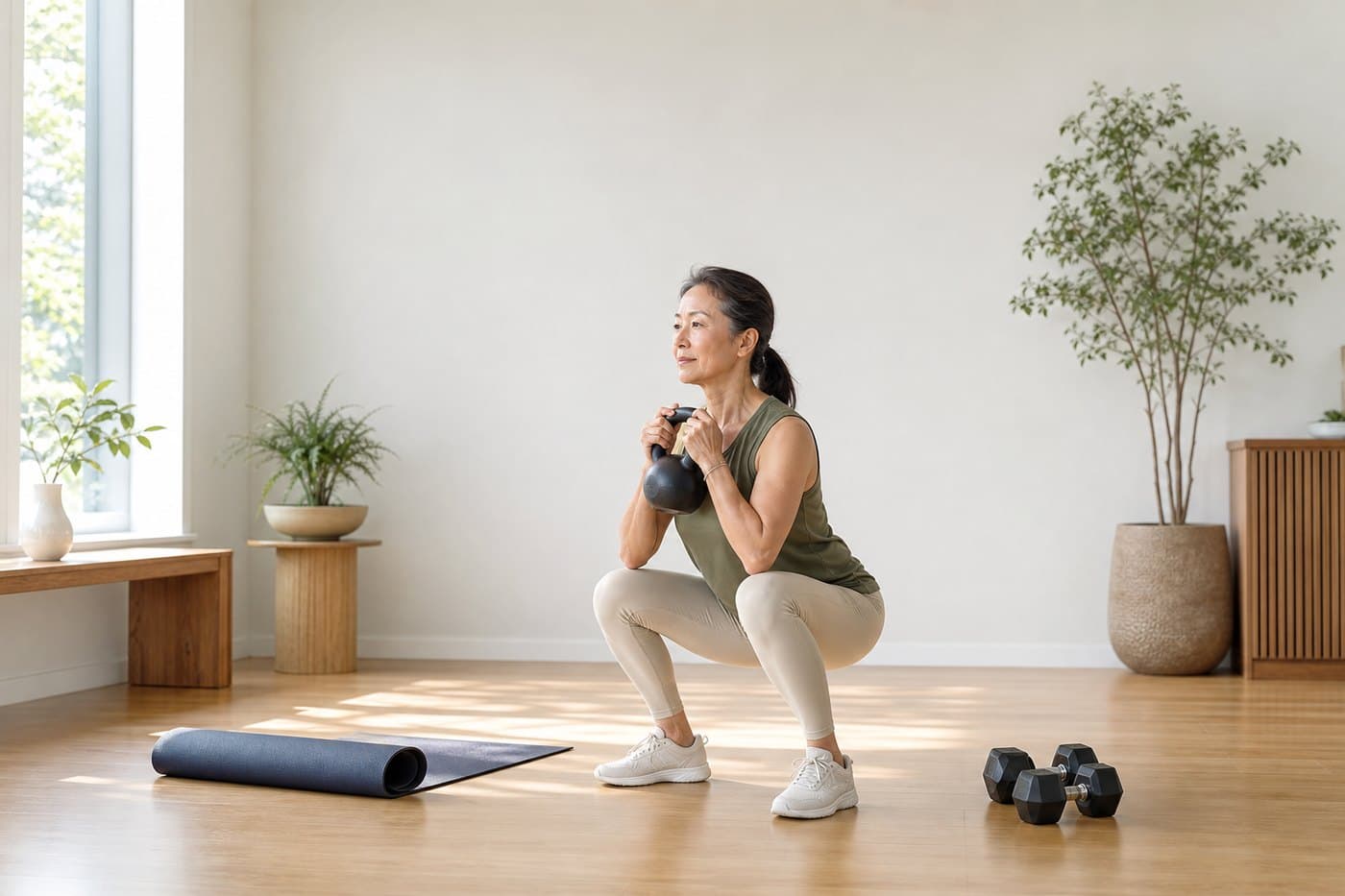
The evidence here is refreshingly clear, and it is not mostly about calcium. The strongest lever is mechanical: bone rebuilds where it is loaded, so strength training and impact work, meaning lifting, jumping, stair climbing, brisk hills, are the interventions with the best trial evidence for holding density.
Protein matters more than most women were ever told, roughly a palm-sized portion at each meal, because muscle and bone decline together and the falls that break bones are usually muscle failures first. Calcium and vitamin D hold their modest, real place: food-first for calcium, and vitamin D as one of the few supplements this site treats as evidence-backed for this specific job.
HRT deserves its plain sentence: it is one of the best-evidenced protectors of bone density, that benefit is part of the decision it belongs to, and the timing conversation lives in our HRT pages. For women with osteoporosis itself, dedicated bone medications exist and work; that is a specialist conversation the scan result opens.
The version that fits an actual life
Two or three strength sessions a week, weight on the bar or in the hands, some impact in the mix, protein at each meal, and a scan when your risk factors say so. That is the entire evidence-backed core, and it fits inside a normal week.
What does not help is the anxiety-purchase shelf: the boron, the collagen sachets, the specialist bone blends. The evidence there is thin to absent, and every dollar spent on them is a dollar not spent on the gym membership or the physical therapist, which is where the data actually points.
Common questions
Is it too late to build bone in my 60s?
Density gains get harder with age, but slowing loss, improving balance and strengthening muscle remain fully available, and fracture risk runs through all three. The trials that reduced fractures in older women did it mostly with strength and balance work, not with anything exotic.
How much calcium do I actually need?
Around 1,000 to 1,200 milligrams a day, and food gets most women there: dairy, canned fish with bones, greens, fortified alternatives. Supplementing far beyond that has no extra bone benefit and some questions attached, so the food-first answer is also the evidence answer.
My scan says osteopenia. Should I be worried?
Worried is not the useful word; informed is. Osteopenia is common after menopause and it is the stage where lifestyle changes pay best. It is a reason to take the strength work seriously and to rescan on the schedule your clinician suggests, not a diagnosis of fragility.

Sources
- Royal Osteoporosis Society, bone health guidance
- USPSTF osteoporosis screening recommendation; NICE risk assessment guidance (UK)
- Bone Health and Osteoporosis Foundation, US guidance
- LIFTMOR trial and related resistance-training evidence
- NIH Office of Dietary Supplements, calcium and vitamin D
General information, not medical advice. Narrated never diagnoses.