The question underneath
Is this the start of dementia?
The fear almost nobody says out loud. What is understood, what is different, and when it is worth being seen.
5 minSource: Narrated
Why it gets asked
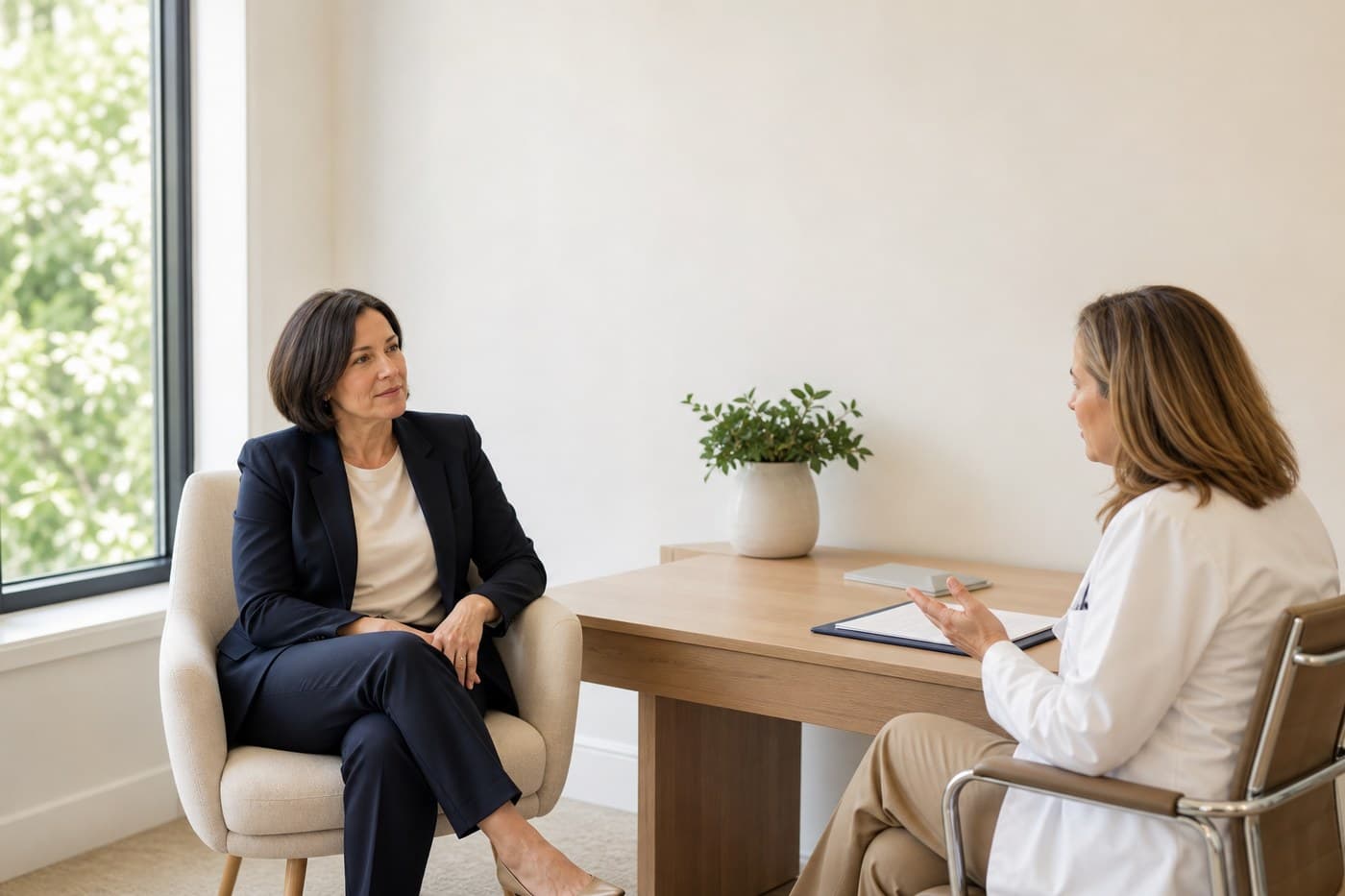
Because losing a word in front of people is frightening, and because this decade is often when women are also watching a parent decline.
It is one of the most common private worries at this stage and one of the least often raised in an appointment.
What is generally understood
Cognitive changes around the menopause transition are common and are generally described as temporary, with performance in studies tending to return toward earlier levels afterwards.
The pattern also tends to differ. What is commonly described here is slower recall and difficulty holding several things at once, with the information still there once it arrives.
That is not a diagnosis and it is not a promise about you. It is the general picture, and the general picture is more reassuring than the experience of it.
When it is worth being seen
Getting lost somewhere familiar, or difficulty with tasks you have done for years.
Other people noticing and mentioning it before you do.
Memory that is clearly worsening over months rather than fluctuating with sleep and stress.
Any of that deserves an appointment, and asking is the right response to being frightened rather than an overreaction.
What most women want to know is whether this is permanent. The research on that is more reassuring than the experience of it.
General information, not medical advice. Narrated never diagnoses.
More in Narrated Brain fog

The word that will not come
Stopping dead in the middle of a sentence, in front of people. What it is, and what to do in the four seconds after.
3 min · Narrated
Walking into a room and forgetting why
The most-quoted version of midlife brain fog, and the practical explanation behind it.
3 min · Narrated
Taking the load off memory
Trusting paper instead of your head is not giving in. It is the single change women say made the most difference.
4 min · Narrated

Get the weekly letter
One useful email a week on perimenopause and menopause. What the studies say, in plain words. Free.
Or find out what is happening to you, free, in two minutes.