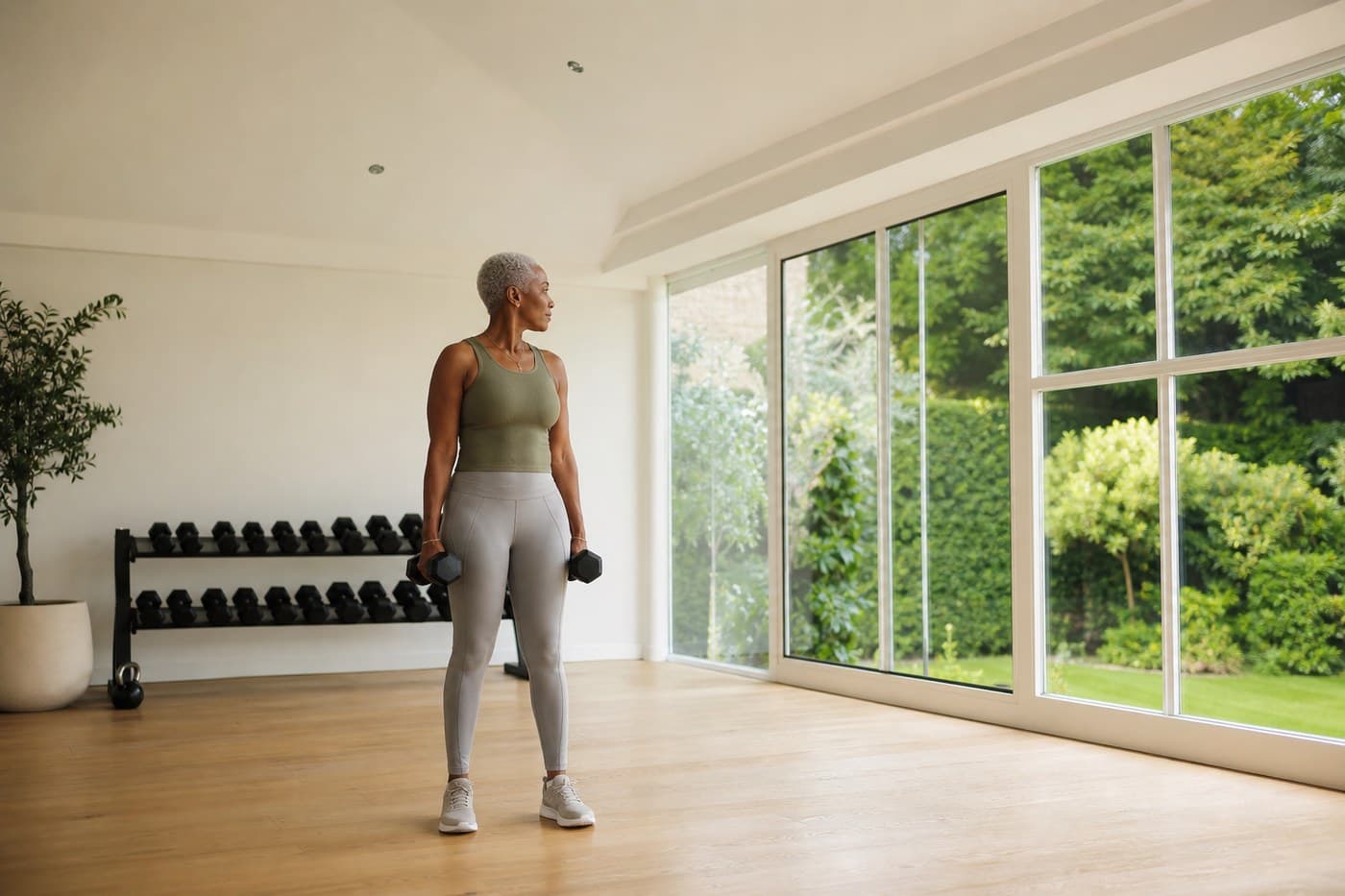
Most advice about midlife bodies is about eating less. The evidence points somewhere else: building and keeping muscle, and eating enough protein to support it.
This is the least glamorous and most reliable part of this whole subject. It also happens to be the part that protects bone density and independence decades later, which makes it worth doing whether or not your weight ever changes.
Why muscle is the lever
Muscle mass declines with age unless it is actively maintained, and the decline accelerates around the menopause transition. Less muscle means less used at rest, weaker blood sugar handling and a body that copes less well with everything.
That means the same amount of eating produces a different result at 50 than at 35, which is the mechanism behind the experience almost every woman describes.
Building muscle is also the only response to that which improves the situation rather than compensating for it. Eating less compensates. Strength changes the terms.
What strength training actually means
For most women this is the point at which the advice stops being useful, because it conjures a gym full of equipment and people who know what they are doing.
- Twice a week is the target in most guidance. Not five times.
- It can be done at home with body weight and a couple of dumbbells.
- It means working the muscles to the point where the last few repetitions are genuinely hard. That is the part that counts, not the equipment.
- Six to eight movements covering legs, hips, back, chest and shoulders is a complete program. It does not need to be complicated.
- Twenty to thirty minutes is enough.
On being worried about looking bulky
This comes up constantly and it is worth answering plainly. Building visible muscle mass is difficult and deliberate, and it does not happen accidentally to women lifting twice a week at 48.
What does happen is that things get easier: stairs, shopping, getting off the floor, and the thing nobody mentions until later, staying independent.
Protein, in practical terms
The general guidance most often given for maintaining muscle in midlife sits above the standard minimum, and the more useful point is distribution rather than the total.
Most people in the US and the UK eat very little protein at breakfast and a great deal at dinner. Spreading it across meals appears to support muscle better than the same amount concentrated in the evening.
In practice that usually means changing breakfast, which is also the change women most often say they noticed within two weeks, mainly through the afternoon dip disappearing.
- Eggs, Greek yogurt, or last night's leftovers instead of toast alone.
- Something with protein in it at lunch rather than a carbohydrate-only sandwich.
- Beans, lentils, fish, dairy, eggs and meat all count. There is no need for a shake unless you like them.
- If you have kidney disease or another condition affecting protein intake, this is a conversation with your own clinician rather than a general rule.
Where to start this week
One change, not five. Either protein at breakfast every day for two weeks, or two short strength sessions a week for two weeks. Adding both at once is how most people end up doing neither.
The movement section holds strength sessions written for midlife bodies, most of them under twenty minutes, and the food section is filtered for higher protein.
Common questions
How much protein do I need in perimenopause?
General guidance for maintaining muscle in midlife sits above the standard adult minimum, and distribution matters as much as the total. Spreading it across meals rather than concentrating it at dinner appears to support muscle better. Individual needs vary, particularly with kidney conditions.
Will lifting weights make me bulky?
No. Building visible muscle mass is difficult and deliberate. Twice-weekly strength training in midlife produces strength, better bone density and easier daily life rather than size.
Do I need a gym?
No. Body weight and a couple of dumbbells at home covers it. What matters is that the last few repetitions are genuinely hard, not what building you are in.
Do I need protein powder?
No. Eggs, yogurt, beans, lentils, fish, dairy and meat all count and most people can reach a sensible intake from food. Powder is convenient rather than necessary.
Keep going

Harissa Salmon & Herby Couscous
You have read the why. This is a place to start actually living it.
Sources
- US Physical Activity Guidelines for Americans; NHS (UK) guidelines
- Royal Osteoporosis Society, exercise and bone health
- British Dietetic Association food fact sheets
- The SWAN study of women's midlife health
General information, not medical advice. Narrated never diagnoses.